You send the same resume to a dozen jobs and hear nothing back. Then a friend with less experience gets three interviews. The difference is often not the resume itself, but how it was read: by an applicant tracking system (ATS) before a human ever opened it.
This guide explains what an ATS actually does with your CV, how "ATS ranking" works in practice, and what you can control. No scare tactics, no magic keywords — just how the software reads your application and how to make that reading accurate.
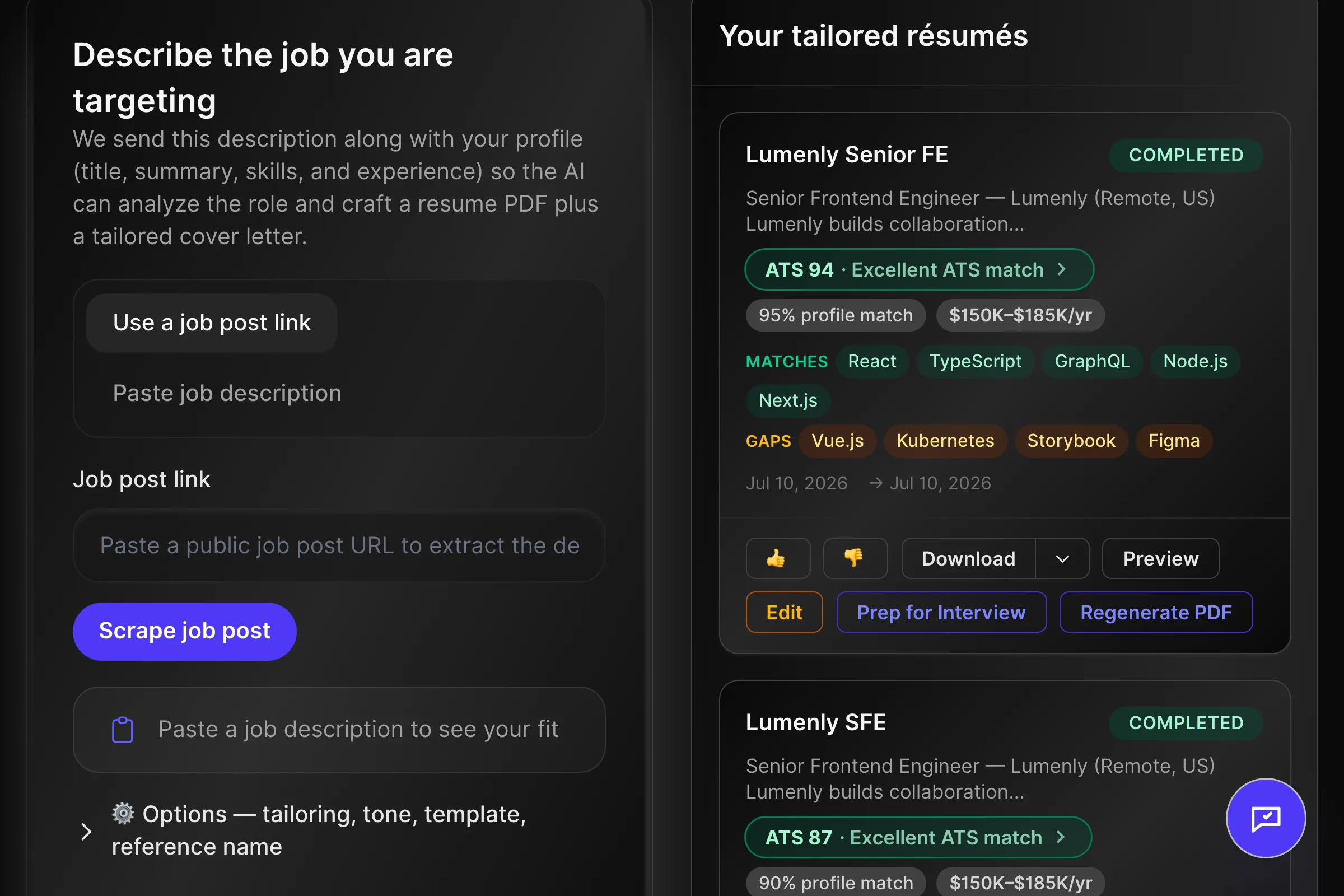
What is an ATS score checker?
An ATS score checker compares one resume with one job description and returns a match score plus the terms it could not find in your CV. Treat it as a gap-finder rather than a hiring verdict: the score shows which parts of the ad your resume does not answer yet. Check your ATS score free in FuqHR — paste the job ad, read the score and the missing keywords, fix those lines, then re-score the same resume.
What an ATS actually does with your resume
An applicant tracking system is the database employers use to receive, store, search and filter applications. When you apply through a careers page, the file lands in this system, not in a recruiter's inbox.
The three jobs of an ATS
- Parse — turn your file into structured fields: name, contact details, work history, education, skills.
- Filter — apply the employer's rules: knockout questions, required keywords, minimum experience.
- Rank and search — order candidates so a recruiter can shortlist from the top, or search by keyword when a role opens up.
Nothing about this is personal. The system is doing exactly what the employer asked it to do. Your job is to be easy to parse and clearly relevant.
What an ATS can see (and what it can't)
The most persistent myth is that an ATS "rejects" resumes for design choices. In reality, parsing is the whole game: if the software can read a field correctly, it can use it.
- Can see: plain text, headings, standard section names, dates, contact details, and the words you use to describe your experience.
- Often misses: text inside images or icons, content in headers and footers, text embedded in tables or columns, and anything conveyed only by colour or layout.
- Can't judge: how you'd fit the team, how you wrote a bullet, or whether your "senior" means the same as theirs. Ranking is a keyword and relevance exercise, not a taste test.
That is why a visually identical resume can parse perfectly for one candidate and crumble for another: it comes down to structure.
How ATS ranking actually works
There is no single algorithm — a small startup and a large enterprise use very different setups. But most ranking pipelines follow the same four stages.
Stage 1: Parsing
The system converts your file into fields. Errors here cascade: if your job titles land in the wrong box, later scoring becomes unreliable.
Stage 2: Knockout questions and filters
Work authorisation, location, years of experience, certifications. These are usually hard yes/no conditions you answered during the application. A "no" can remove you before anyone reads a word, so answer them carefully and honestly. If you are applying with little or no work history, our guide to writing a CV with no experience covers how to answer that screen without inventing anything.
Stage 3: Keyword and relevance scoring
The system compares your text against the job description and scores the overlap. Exact matches for skills, tools, certifications and job titles score best. This is the stage people mean when they say their "ATS score".
Stage 4: Human review of the shortlist
A recruiter opens the top of the ranked list — often the first page or two — and starts reading. Everything before this point only decides whether you get read; the resume still has to win that read.
Keyword matching: the part that decides most outcomes
If your resume and the job ad describe the same work in different words, the overlap score suffers. The fix is not stuffing keywords, it is mirroring the employer's language where it is genuinely true. If you want a repeatable way to find those terms, our guide on how to extract CV keywords from a job description covers the method.
- Use the exact tool and skill names from the ad (for example "Figma", "SQL", "HubSpot") rather than vague substitutes.
- Match the job title where it is accurate — "Customer Success Manager", not "Client Happiness Ninja".
- Repeat the most important terms naturally in your summary and top bullets, not once in 12-point grey text.
- Spell out an acronym once, then use it ("Search Engine Optimisation (SEO)"), so you match both forms.
The goal is a resume that reads like a strong answer to this job ad, because that is exactly what the scoring stage rewards.
Formatting mistakes that quietly break parsing
- Tables and multi-column layouts — text order can scramble into nonsense.
- Text boxes and images — content the parser cannot read at all.
- Headers and footers — great for page numbers, risky for your phone number.
- Non-standard section names — "Where I've Been" instead of "Experience".
- Exotic fonts and glyphs — bullets and icons that render as unknown characters.
None of these are about style. A clean, single-column resume with standard headings simply gives the software fewer ways to get your details wrong.
The six-second human scan (and why the ATS score is not the goal)
Passing the filter only buys you a read. Recruiters scan for relevance fast: the title, the last role, a few numbers, a reason to keep going. A resume that is keyword-perfect but written as a wall of duties still loses here.
So aim for both: machine-readable structure that scores well, and human-first writing — concrete results, specific tools, and a clear reason you fit. A high score that a person still enjoys reading is the whole point.
How to check and improve your ATS score
You can only fix what you can see. A good workflow is: read the job ad closely, align your language with it, then get a score against that specific ad and iterate on the gaps.
FuqHR does exactly that: it takes your existing CV and a pasted job ad and returns a tailored, ATS-friendly CV and cover letter, with a live ATS score so you can see the difference before you apply. It is faster than guessing which keywords a system wants. If you would rather do the work by hand, our step-by-step guide to tailoring your CV to a job description shows the same workflow manually.
If you are weighing tools, our comparison of FuqHR, Jobscan, Rezi and Resume Worded covers what each one actually does, what it costs in 2026, and which one fits how you apply.
FAQ: how ATS ranks resumes
Do all companies use an ATS?
Most mid-size and large employers do; small companies often apply by email or a simple form. When you apply through a careers portal, assume a system is reading first.
Will a fancy template get me rejected?
Rarely on purpose. The risk is parsing: images, tables and multi-column designs make it likelier your details land in the wrong fields.
How many keywords do I need?
Enough that a reader would say you clearly match the role — typically the skills, tools, and title in the ad used naturally in your summary and recent bullets.
Is there a free ATS score checker?
Yes. FuqHR scores your CV against the job ad you paste and returns the score together with the tailored CV and cover letter, free while the product is in beta — no paid plan and no card. The score is only useful if it comes with the fix, which is why the checker sits inside the tailoring step rather than beside it.
What is a good ATS score?
There is no universal pass mark, because every employer sets its own keywords and filters. Read the gap instead of the number: if the checker lists terms from the ad that your CV never mentions, close those first. A resume that covers the ad's real requirements and still reads well to a person beats one chasing a perfect score.
Is the ATS score the final decision?
No. It decides who gets read. A person still decides who gets interviewed.
What should I do the rest of the week?
Apply the same discipline to volume and follow-up with our free job search daily action plan, and log every application in our free job application tracker for Google Sheets.
The bottom line
ATS ranking is parsing plus keyword overlap, wrapped in the employer's filters. Make your resume easy to read, mirror the job ad's real language, and let a human see the value on the first scan. Do that consistently and the silence starts to break.
See your ATS score in minutes. Turn your existing CV plus a job ad into a tailored, ATS-friendly application.